Product Overview
Roof
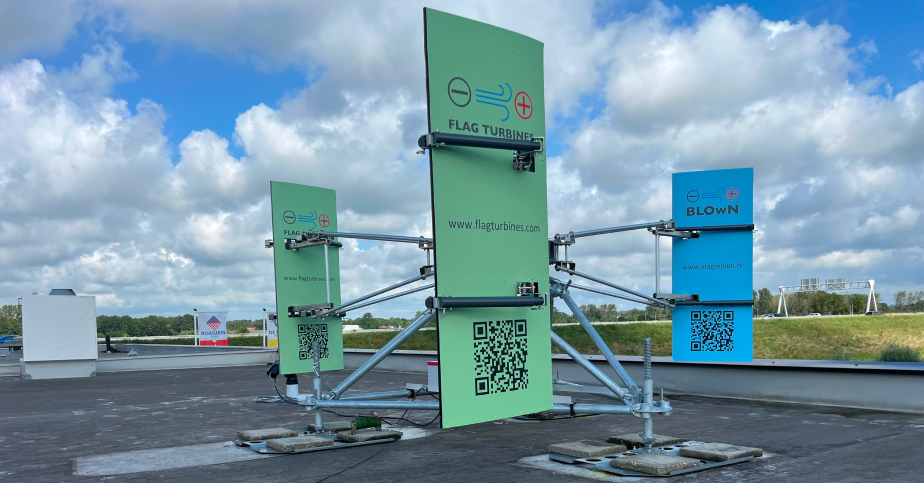
BLOwN Roof vertical axis wind turbines generate renewable energy in urban and built-up areas. They capture wind from any direction, including the turbulent airflow found around buildings. They also combine a compact footprint with low rotational speed and low noise.
Subject to a site-specific assessment, BLOwN Roof fits suitable roof structures. It provides clean, on-site generation that can reduce grid dependency and lower carbon emissions. As a result, it can complement solar and battery storage in modern low-carbon buildings.
Land
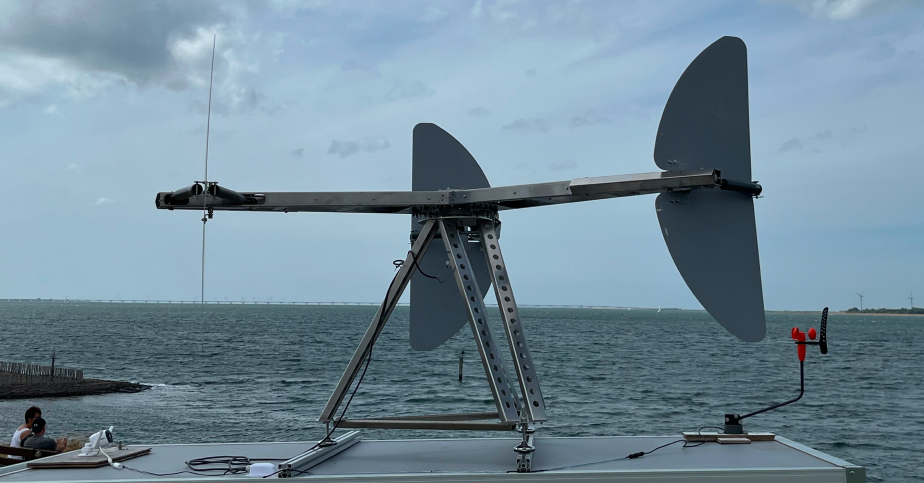
BLOwN Land vertical axis wind turbines provide reliable, decentralized energy generation across a wide range of environments. Their omnidirectional, variable-pitch architecture captures wind from any direction without reorientation. That makes them well suited to variable and turbulent wind conditions.
Unlike conventional horizontal-axis turbines, BLOwN turbines do not need tall towers to produce more power. Instead, they scale through rotor width and swept area, so higher-output models stay comparatively low. The current Land model stands about 11 to 13 meters to blade tip, depending on blade size.
BLOwN Land suits farms, commercial and industrial sites, community energy projects and coastal locations. Where demand justifies it, several units can also work together for scalable on-site generation.
Mobile
BLOwN Mobile turbines are a portable way to generate renewable energy in diverse environments. Unlike our fixed models, they are easy to transport and quick to deploy. That makes them ideal for temporary setups or places with minimal infrastructure.
Because they capture wind from any direction, they keep generating without repositioning. As a result, they are valuable in remote areas, such as disaster relief zones, military operations or campsites, where power is essential but infrastructure is lacking.
Floating
BLOwN Floating, currently in development, harnesses offshore wind efficiently. These vertical axis wind turbines work in counter-rotating pairs. Their opposing high-torque forces cancel each other out, which substantially reduces the yawing forces passed into the floating platform. This improves overall stability.
The design is modular, so operators can deploy several pairs to meet different energy demands. It suits deep water, where winds are stronger and more consistent. A variable-pitch mechanism optimizes lift, torque and drag, and the turbines capture wind from any direction. Their lower profile also reduces visual impact on coastal communities.